Our Office
Visit Us Online


According to the National Institute of Dental and Craniofacial Research (NIDCR), 3.75% of adults 20 to 64 in the United States are completely edentulous. For the overall population in this age group, the average number of remaining teeth is 24.92 out of a total of 32 permanent teeth.
One of the ways to replace missing teeth to restore oral function and appearance is with dentures. Depending upon the needs of a case, dentures can be used to replace either a few teeth that have been lost or all of the teeth in the upper or lower jaws. In addition to reestablishing the look of a complete and natural smile, dentures also restore support to the natural contours of the face to eliminate the “sunken” appearance that results from losing multiple teeth. Whether teeth have been lost for reasons of tooth decay, gum disease, a medical condition, congenital anomaly, or trauma, dentures are an effective method of care.
Dentures are removable appliances that are designed to precisely and comfortably rest on top of the gums that cover the jawbones. They can be taken out of the mouth for brief periods of time to fulfill the oral hygiene requirements of maintaining the underlying tissues, cleaning the dentures, and sleeping.
Types of Dentures
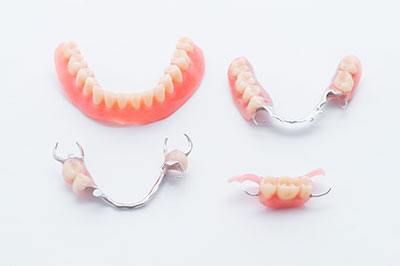
The two main types of dentures are: full dentures and partial dentures. Both types are custom fabricated based on the exact specifications obtained from dental impressions and detailed functional as well as esthetic information provided by the dentist.
Full Dentures
Full dentures, which can also be referred to as, “complete dentures,” are designed to replace all of the upper or lower teeth. A complete maxillary denture, more commonly known as a, full upper denture, typically consists of a base that covers the roof of the mouth with a full complement of artificial teeth set around the section covering the dental arch. On the other hand, a complete mandibular denture, or full lower denture, is designed to accommodate the tongue and is horseshoe shaped with teeth set along the portion that covers the underlying dental arch.
Partial Dentures
A partial denture is a type of removable prosthesis that is designed to restore a complete and functional smile in cases where multiple teeth are missing or require extractions, while some healthy teeth remain in the dental arch. Custom fabricated for a precise fit and cosmetically pleasing appearance, partial dentures are typically secured and stabilized with clasps or precision attachments to select teeth adjacent to the edentulous areas. Depending upon the number of teeth being replaced as well as the functional and aesthetic requirements of the case, a partial denture can be fabricated from a combination of cast metal and acrylic materials, acrylic alone, or thermoplastic resins such as ValplastTM, Flexite®, Duroflex® and tcs®.
Dentures are removable prosthetic appliances that replace missing teeth and the surrounding tissues to restore chewing function and facial support. The prosthesis consists of artificial teeth set into a base that follows the contours of the mouth so it seats against the gums and distributes biting forces. When designed with attention to bite relationships and esthetics, dentures can improve speech, chewing efficiency, and the appearance of the lower face.
Modern denture materials mimic the shade and translucency of natural teeth while base materials are engineered for comfort and durability. Because dentures are removable, they allow for straightforward cleaning of both the appliance and the oral tissues beneath it. Proper fit and occlusion are essential to minimize sore spots and to maintain long-term function.
Removable dentures generally fall into two broad categories: complete (full) dentures that replace all teeth in an arch, and partial dentures that fill gaps left by one or more missing teeth. Partial dentures often rely on remaining teeth for support and can be fabricated from cast metal, flexible resin, or hybrid materials depending on the case requirements. Complete dentures are designed to restore an entire upper or lower arch and require careful attention to tooth arrangement and bite registration.
Hybrid and attachment-enhanced options also exist, such as overdentures that fit over retained roots or implant-assisted dentures that clip onto implants for improved retention. These approaches can increase stability and chewing efficiency while preserving bone and supporting facial contours. The right choice depends on oral health, bone volume, and the patient’s functional goals.
Good candidates for dentures include patients who have lost multiple teeth or an entire arch and seek to restore function, appearance, and oral support. Candidates should undergo a thorough clinical evaluation to assess gum health, remaining teeth, and bone structure so the prosthesis can be planned to minimize complications. When remaining teeth are present, preserving the health of those teeth and their supporting tissues is a priority for predictable partial denture performance.
Patients who desire enhanced stability may also be evaluated for implant-assisted solutions that combine implants with removable prostheses. The decision to proceed with a particular denture design is based on long-term goals, oral health status, and the clinical findings from diagnostic records. A coordinated treatment plan helps ensure the denture integrates well with other restorative or surgical procedures when needed.
Immediate dentures are inserted at the time of tooth extraction so the patient leaves the appointment with teeth in place, while conventional dentures are fabricated after the tissues have healed. Immediate dentures provide immediate esthetic and functional replacement but commonly require relines or adjustments as healing changes the shape of the underlying tissues. Conventional dentures often provide a more stable fit from the start because fabrication begins after healing has progressed.
When planning immediate dentures, clinicians account for anticipated tissue shrinkage and provide follow-up relines or adjustments to maintain fit. Both approaches aim to restore function and appearance, but the timeline and need for early adjustments differ. The appropriate option depends on the clinical scenario and the patient’s preferences regarding timing and interim care.
Implant-assisted dentures use dental implants strategically placed in the jaw to anchor a removable prosthesis, which significantly reduces movement during chewing and speech. Attachments such as locators, bars, or snaps allow the denture to clip onto the implants, providing improved retention compared with conventional tissue-supported dentures. This enhanced stability promotes greater comfort, more efficient chewing, and increased confidence during daily activities.
Implant-assisted options can also slow jawbone resorption by preserving bone around functional implants, helping maintain facial support over time. Treatment requires coordination between surgical implant placement and prosthetic planning so implant positions align with the final denture design. Not every patient is a candidate for implants, so a thorough evaluation determines suitability and the optimal attachment type.
Daily care for dentures includes removing the appliance at night, brushing it with a soft denture brush or nonabrasive cleanser, and rinsing it after meals to remove food debris. It is also important to gently brush the gums, tongue, and any remaining natural teeth to maintain tissue health and reduce the risk of irritation or infection. Soaking dentures overnight in a recommended solution can help disinfect the appliance and preserve its shape when not worn.
Avoid using abrasive household toothpaste or harsh chemicals that can damage denture surfaces, and handle the appliance over a sink filled with water or a folded towel to prevent breakage if dropped. Regular inspection for cracks, wear, or changes in fit helps identify issues early so they can be addressed professionally. Consistent hygiene habits extend the life of the prosthesis and support overall oral health.
The denture fitting process typically begins with a comprehensive exam, diagnostic records, and impressions to capture the shapes of the jaws and tissues. Subsequent steps include bite registration, wax try-ins to evaluate tooth position and esthetics, and final fabrication of the appliance to achieve correct occlusion and facial support. Attention to each step reduces the need for extensive adjustments after delivery.
If extractions or preparatory treatments are needed, the treatment plan will account for healing time and timing of prosthesis placement so the final denture adapts well to the mouth. Try-in appointments give the patient and clinician a chance to fine-tune appearance and function before the denture is processed. Skilled laboratory communication and clinical precision are both critical to predictable outcomes at delivery.
Adjustment to new dentures varies among individuals, but most patients experience increased saliva, minor soreness, and initial differences in speech or chewing that improve over days to weeks. Practicing with soft foods, chewing on both sides, and reading aloud to speed speech adaptation are common strategies recommended during the early period. Small, selective adjustments by the clinician often relieve sore spots and improve comfort as tissues adapt.
Persistent pain, significant difficulty eating, or ongoing stability issues warrant a prompt clinical review so the denture can be modified. Early follow-up appointments are important to track adaptation and address problems before they become more troublesome. Over time, routine relines or adjustments may be needed as the jawbone and soft tissues remodel.
Follow-up visits are essential during the initial weeks after delivery to assess fit, bite, and tissue response; clinicians typically schedule early checkups to make any necessary relines or selective adjustments. Periodic recall appointments thereafter allow the provider to monitor oral tissues, examine any remaining teeth, and confirm the ongoing suitability of the denture. Timely professional attention prevents small issues from becoming larger problems and supports long-term comfort.
Patients should also request an appointment if they experience persistent soreness, looseness, changes in speech, or visible damage to the denture. Early intervention can preserve oral health and reduce the need for more extensive corrective work. Regular exams are a key component of effective denture maintenance.
Well-designed dentures restore vertical dimension and lip support, which can improve facial proportions and reduce a sunken or aged appearance associated with tooth loss. Replacing missing teeth also helps maintain proper bite relationships and can prevent neighboring teeth from shifting into empty spaces, which preserves chewing efficiency and oral function. By restoring the ability to chew a wider variety of foods, dentures can support better nutrition and quality of life.
Long-term oral health benefits depend on proper fit, regular maintenance, and routine dental exams to monitor tissue changes and the condition of any remaining teeth. In cases where bone preservation is a priority, options such as overdentures or implant-assisted prostheses may offer advantages. Discussing goals and concerns with your dental provider ensures the chosen solution supports both function and facial esthetics.