Our Office
Visit Us Online


For teeth with imperfections that cannot be addressed with teeth whitening procedures, but are not so flawed as to require full coverage crowns, dental veneers can provide the desired cosmetic improvements.
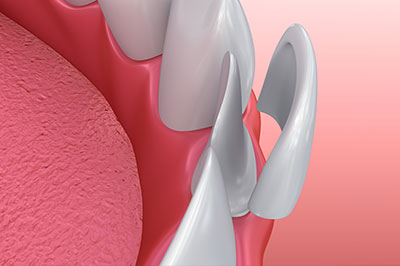
Dental veneers are custom-fabricated facings that offer a conservative and cosmetically pleasing way to improve the appearance of teeth that are chipped, gapped, worn, slightly crooked, misshapen or darkly stained. With dental veneers, the color, shape, size, and length of the teeth can be changed for the better. Bonded to the front surfaces of the teeth, veneers can be used to enhance the appearance of a single tooth or multiple anterior teeth.
The two most common types of veneers are porcelain veneers, which are also known as porcelain laminates, and composite veneers. While porcelain veneers are the most commonly offered option in care, composite veneers can also achieve excellent results. Starting with a smile makeover consultation and a comprehensive assessment of a patient’s oral health as well as a discussion of the cosmetic goals, the dentist will determine a treatment plan to achieve the most pleasing outcome of care.
Porcelain Veneers
Porcelain veneers are ultra-thin facings that are custom fabricated from the highest grade of dental ceramics and offer the following benefits:
Composite Veneers
When direct composite veneers are the selected method of care, the dentist applies carefully selected shades of tooth-colored composite resins to the fronts of the involved teeth. As the composite resin is placed, it is meticulously sculpted to create the desired shape, length and overall form of each tooth. Each layer of applied composite is then cured with a special light, and additional layers of composite are placed as required to achieve an aesthetically pleasing and functional result. Once the final result is completely set, the dentist will smooth and polish the direct composite veneers to a naturally brilliant finish.
While composite veneers frequently offer the advantages of being a single visit procedure, easy to repair and an economical alternative to porcelain veneers, they are not as strong or resistant to staining and wear as dental ceramics. However, by avoiding certain dietary choices and habits, practicing good oral hygiene and getting routine dental care, direct composite veneers can offer an effective and long lasting cosmetic smile improvement.
Porcelain veneers are ultra-thin ceramic shells bonded to the front surfaces of teeth to improve color, shape and minor alignment concerns. They are designed to mimic the light-reflecting properties of natural enamel so restorations appear vibrant and authentic. Bonding creates a stable interface that helps the veneer integrate with the tooth while preserving as much healthy enamel as possible.
Because porcelain is strong and highly resistant to staining, veneers provide a long-lasting aesthetic solution when fabricated and bonded correctly. The material’s translucency and layered construction allow dental ceramists to reproduce subtle characteristics of natural teeth. With appropriate planning and maintenance, veneers can harmonize the appearance of the smile without requiring full-coverage restorations.
Veneers cover only the front surface of teeth and require minimal enamel removal in many cases, while crowns encase the entire visible portion of a tooth. Crowns are typically chosen when a tooth needs significant structural support due to large restorations, fractures or advanced decay. Because crowns replace more tooth structure, they are a more invasive restorative option compared with veneers.
Veneers are primarily a cosmetic treatment best suited for improving appearance rather than repairing major structural damage. When the goal is to preserve natural tooth strength and address aesthetic concerns like discoloration or mild wear, veneers are often preferred. Your dentist will evaluate form, function and long-term prognosis to recommend the most appropriate restoration.
Good candidates for veneers generally have healthy gums, stable bite relationships and sufficient enamel for bonding. Patients who seek to correct intrinsic staining, minor chips, worn edges or slight alignment issues often benefit from veneers when expectations are realistic. A comprehensive clinical exam will determine whether veneers are the most suitable option based on oral health and functional needs.
Active decay, untreated gum disease, or severe bite problems may require preliminary restorative or periodontal care before cosmetic work. In cases of heavy clenching or grinding, protective measures such as a night guard may be recommended to improve long-term outcomes. At Frisco Smiles Dentistry we assess these factors and discuss alternatives so patients can make informed decisions about their care.
The fabrication process begins with precise impressions or digital scans that capture tooth anatomy and bite relationships. Skilled dental ceramists layer porcelain to reproduce translucency, edge characteristics and subtle color variations so veneers blend with adjacent teeth. Shade selection and texture mapping are guided by clinical photos, patient preferences and an understanding of facial proportions.
Communication between patient, clinician and laboratory is essential to achieve a natural result, and many practices use temporary mock-ups or digital previews during planning. These provisional guides let patients visualize changes and provide feedback before final fabrication. The result is a customized restoration that complements your smile and facial features while maintaining natural-looking detail.
Treatment typically begins with a consultation and diagnostic workup to confirm oral health and clarify aesthetic goals. When teeth are ready, a conservative amount of enamel is reshaped to create space for the veneers, digital or physical impressions are taken, and temporary veneers may be placed while the laboratory fabricates the final restorations. This staged approach allows for functional assessment and aesthetic refinement before permanent bonding.
At the bonding appointment the dentist checks fit, shade and comfort and makes minor adjustments as needed before securing the veneers with dental adhesive under controlled conditions. After bonding, bite relationships are verified and small refinements are completed so the veneers feel natural in daily function. Frisco Smiles Dentistry schedules a follow-up visit to confirm tissue response and to review personalized care instructions that support longevity.
Porcelain veneers can last many years when supported by good oral hygiene, regular dental maintenance and avoidance of damaging habits. Material quality, laboratory technique, bonding protocol and the patient’s bite dynamics all influence longevity. Routine exams allow the dental team to monitor margins, underlying tooth health and soft tissue response to identify issues early.
Habits such as chewing on hard objects, frequent clenching or using teeth as tools can shorten the service life of veneers, so protective strategies may be recommended for at-risk patients. Even though porcelain resists staining, maintaining healthy habits and attending regular cleanings helps preserve appearance and function. When problems occur, early intervention often allows conservative repair rather than full replacement.
Caring for veneers follows the same principles as caring for natural teeth: brush twice daily with a non-abrasive toothpaste and floss once a day to keep margins healthy and reduce the risk of decay on adjacent surfaces. Regular professional cleanings and dental checkups are important so the clinician can evaluate the condition of both the veneers and supporting tissues. Consistent oral hygiene helps prevent gum inflammation that can compromise veneer margins over time.
Although porcelain is highly stain-resistant, limiting prolonged exposure to strongly colored foods and tobacco use will help maintain the original shade. Patients who grind or clench should discuss night guards to protect veneers and underlying teeth from excessive force. Promptly reporting any chips, looseness or sensitivity allows for timely assessment and conservative management when needed.
Minor chips and surface defects can sometimes be repaired with composite bonding in the dental office, but the feasibility of repair depends on the extent and location of the damage. If a veneer becomes loose it should be evaluated promptly so the dentist can determine whether re-bonding is possible or replacement is required. Quick attention to these issues often preserves more tooth structure and avoids more extensive treatment later.
When replacement is necessary, the laboratory can fabricate a new veneer that matches the existing restorations and surrounding dentition. Periodic monitoring after repair or replacement helps ensure the restored tooth remains healthy and functional. Your dentist will explain the best approach based on the specific circumstance and the condition of the underlying tooth.
Yes, when planned thoughtfully veneers are designed to harmonize with your facial proportions, lip line and neighboring teeth so the result appears natural rather than uniform. Skilled ceramists and clinicians reproduce translucency, texture and subtle hue variations to mimic natural enamel and avoid an artificial appearance. Careful shade selection and attention to tooth proportions help create a balanced, individualized smile.
Mock-ups, temporary veneers or digital previews can help you and the dental team evaluate the proposed changes before final bonding, allowing adjustments to shape, length and color. In some cases selective whitening of adjacent teeth prior to veneer selection improves overall integration. Open communication about aesthetic goals ensures the final outcome reflects both clinical judgment and patient preferences.
Depending on your goals and clinical situation, conservative alternatives include professional whitening, direct composite bonding, orthodontic treatment such as clear aligners, or full-coverage crowns for teeth that require structural restoration. Whitening can address many surface and some intrinsic stains, while bonding repairs small chips or reshapes teeth without the need for laboratory-fabricated restorations. Orthodontics can correct alignment issues that might otherwise be masked by veneers, preserving more natural tooth structure.
A thorough consultation will compare these options in terms of expected outcomes, longevity and how they fit your oral health needs. The optimal choice balances aesthetics with function and long-term dental health, and the dental team will recommend the approach that best meets those priorities. Discussing all viable alternatives ensures you make an informed decision aligned with your goals.